
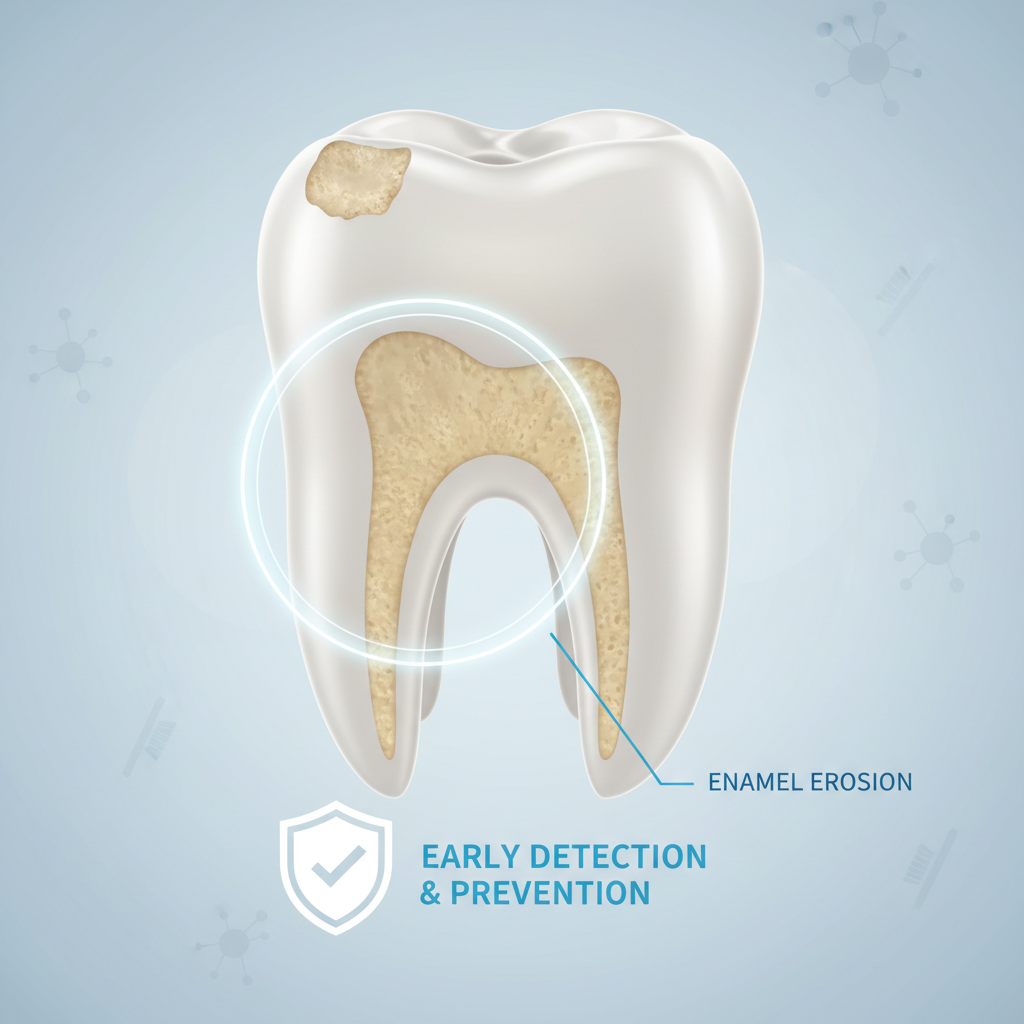
If you are wondering what is enamel erosion teeth and how it affects your oral health, you are not alone. Tooth enamel erosion, also called enamel erosion or dental erosion, happens when the hard outer layer of your teeth gradually wears away. This protective coating shields the softer inner layers from temperature changes, acids, and daily wear.
When enamel erodes, your teeth become weaker and more vulnerable to stains, sensitivity, cavities, and even fractures. Tooth erosion is common, affecting nearly 50% of baby teeth and up to 45% of adult teeth across all age groups [1]. Understanding how it starts and what to watch for helps you protect your smile before serious damage occurs.
To understand enamel erosion, it helps to know what enamel does for you. Tooth enamel is the hardest substance in your body and is made mostly of crystalline calcium phosphate. It forms a strong, mineralized shell over the visible part of each tooth and acts as your first line of defense against:
Enamel does not contain living cells. That means once it is worn away, your body cannot regrow it. You can help remineralize and strengthen weakened areas, but you cannot replace enamel that is already lost [2].
This is why early detection and prevention are so important. If you can recognize changes in your enamel early, you and your dentist can act before the damage reaches deeper layers like dentin or the tooth pulp.
Enamel erosion is the gradual loss or thinning of tooth enamel caused by acids or mechanical wear. In erosion, the mineral structure of enamel dissolves or wears away over time, leaving the tooth surface softer, thinner, and more exposed.
Dental professionals distinguish enamel erosion from tooth decay and other conditions:
In many people, erosion and decay can happen together. This combination raises your risk of more serious dental problems, including infections and tooth loss.
Enamel erosion can come from outside sources, inside your body, or from mechanical forces. Often, more than one factor is involved.
Frequent exposure to acids is one of the leading causes of enamel erosion. According to Penn Dental Family Practice, acidic foods and beverages can dissolve the mineral structure of your teeth and lead to thinning and damage over time [3].
Examples include:
It is not just what you eat or drink, but how often and how you consume it. Sipping acidic drinks throughout the day bathes your teeth in acid for hours, which is more damaging than having them with a meal and then giving your mouth time to recover.
Acids do not only come from food and drink. Stomach acid can also reach your mouth and cause serious enamel erosion. Healthdirect Australia notes that dental erosion often results from acids originating in the stomach or from acidic foods and drinks, and it can affect you at any age [4].
Internal sources of acid include:
When stomach acid repeatedly comes into contact with your teeth, it is strong enough to soften and wear away enamel quickly. In these cases, managing the underlying medical issue is a key part of protecting your teeth.
Saliva is a powerful natural defense against enamel erosion. It neutralizes acids, washes away food particles, and provides minerals that can help remineralize weakened enamel. If you have reduced saliva flow, or dry mouth, acids stay in contact with your teeth longer and cause more damage.
Healthdirect Australia highlights that erosion severity increases when you do not have enough saliva to neutralize acids [4]. Penn Dental Family Practice also notes that saliva plays an important role in protecting enamel and that reduced saliva production can contribute to enamel loss [2].
Dry mouth can result from:
If you often feel thirsty, have sticky or dry mouth, or difficulty swallowing dry foods, it is worth mentioning to your dentist and physician.
Not all enamel erosion is caused by acids. Mechanical wear can also damage the enamel surface. This includes:
Grinding and clenching place heavy forces on your teeth and can accelerate wear on enamel. Over time, this can flatten tooth surfaces, chip edges, and expose the yellow dentin beneath. If you often wake with jaw pain, headaches, or feel your teeth are getting shorter, you might be grinding and could benefit from a custom night guard.
Enamel erosion usually starts quietly. You might not feel pain at first, but your teeth can give you several early warning signs. Recognizing these changes helps you seek care before the problem becomes more serious.
According to the Cleveland Clinic, early symptoms of enamel erosion can include changes in tooth texture, pitting, discoloration, and sensitivity, and pain as it progresses nearer to the tooth pulp where nerves live [1].
You may notice:
If sensitivity is one of your main concerns, you can learn more about tooth sensitivity causes and treatment while you schedule a dental appointment. Sensitive teeth can have many causes, and enamel erosion is one of the most important to rule out early.
As erosion advances, you might develop:
Any sudden or unexplained pain should be taken seriously. If you have been asking yourself why do my teeth hurt randomly, ongoing erosion may be part of the answer.
Enamel erosion is just one of several common dental conditions. Understanding how it relates to other issues can help you make sense of what you are feeling and seeing in your mouth.
These conditions often overlap. For example, long-term erosion can make cavities more likely, which then increases the risk of infection. That is why early, regular monitoring is so important.
Because enamel does not regenerate once it is lost, enamel erosion is considered permanent. Cleveland Clinic emphasizes that enamel cannot be regrown, but the progression of erosion is usually slow and can be halted with early intervention, good oral hygiene, and regular dental visits [1].
If erosion is not addressed, it can lead to:
In severe cases, extensive erosion and decay can contribute to tooth loss. Preventing erosion and treating it early are much easier than repairing advanced damage later.
You cannot always see or feel every area affected by erosion. That is why regular dental exams are a critical part of protecting your enamel.
During your visit, your dentist may:
If you are unsure when to see a dentist, it can help to review early warning signs dental problems. If you recognize any of these signs in yourself, it is a good idea to schedule an exam.
While you cannot regrow lost enamel, there is a lot your dentist can do to protect weakened teeth, strengthen remaining enamel, and restore function and appearance. Treatment depends on how advanced the erosion is and what is causing it.
For early or mild enamel erosion, your dentist may focus on prevention and remineralization. Treatment approaches include:
These steps do not replace lost enamel, but they can help repair weakened areas and slow or stop further damage.
If significant enamel is lost, your dentist may recommend restorative options to rebuild the protective surface and improve function. Depending on severity, these can include [3]:
If erosion has also led to cavities, your dentist will treat those areas as well. For small cavities, this may mean a filling. For more advanced decay or infection, root canal treatment or other procedures may be necessary.
If you are trying to understand how erosion and decay might be connected in your case, it can be helpful to review signs of cavities early stage and compare them to what you are noticing.
Treating enamel erosion effectively always includes dealing with what caused it in the first place. This may involve:
By identifying and addressing the source of the problem, you protect both your current dental work and your natural teeth.
Prevention is your best tool when you are concerned about what is enamel erosion teeth and how to avoid it. Because enamel cannot be replaced once lost, small daily choices make a meaningful difference over time.
Based on guidance from Cleveland Clinic, Healthdirect Australia, and Penn Dental Family Practice, you can lower your risk of enamel erosion by:
Healthy eating habits also support your teeth. Foods rich in calcium and phosphorus, such as dairy products, leafy greens, nuts, and some fish, help support strong enamel. For more on cavity prevention that also benefits enamel health, you may want to read about how to prevent tooth decay naturally.
Because enamel erosion progresses slowly, it is easy to ignore mild symptoms at first. However, you should schedule a dental visit if you notice:
If you are still unsure, consider comparing your situation with the early warning signs dental problems. Catching issues early lets you and your dentist use more conservative, less costly treatments.
Regular checkups also give your dentist a chance to spot the earliest signs of enamel wear, sometimes before you feel symptoms. That is often the best time to act.
Enamel erosion is one piece of your overall oral health picture. Many common conditions, including cavities, gum disease, sensitivity, and infections, share similar risk factors and can influence one another. By paying attention to small changes, seeking care when something feels off, and following prevention advice, you greatly improve your chances of keeping your natural teeth healthy for life.
If you have been asking what is enamel erosion teeth, the key points to remember are:
If you are noticing any symptoms that concern you, consider scheduling a dental visit soon. A thorough exam, tailored advice, and early treatment, when needed, can make a significant difference for your long-term dental health.