
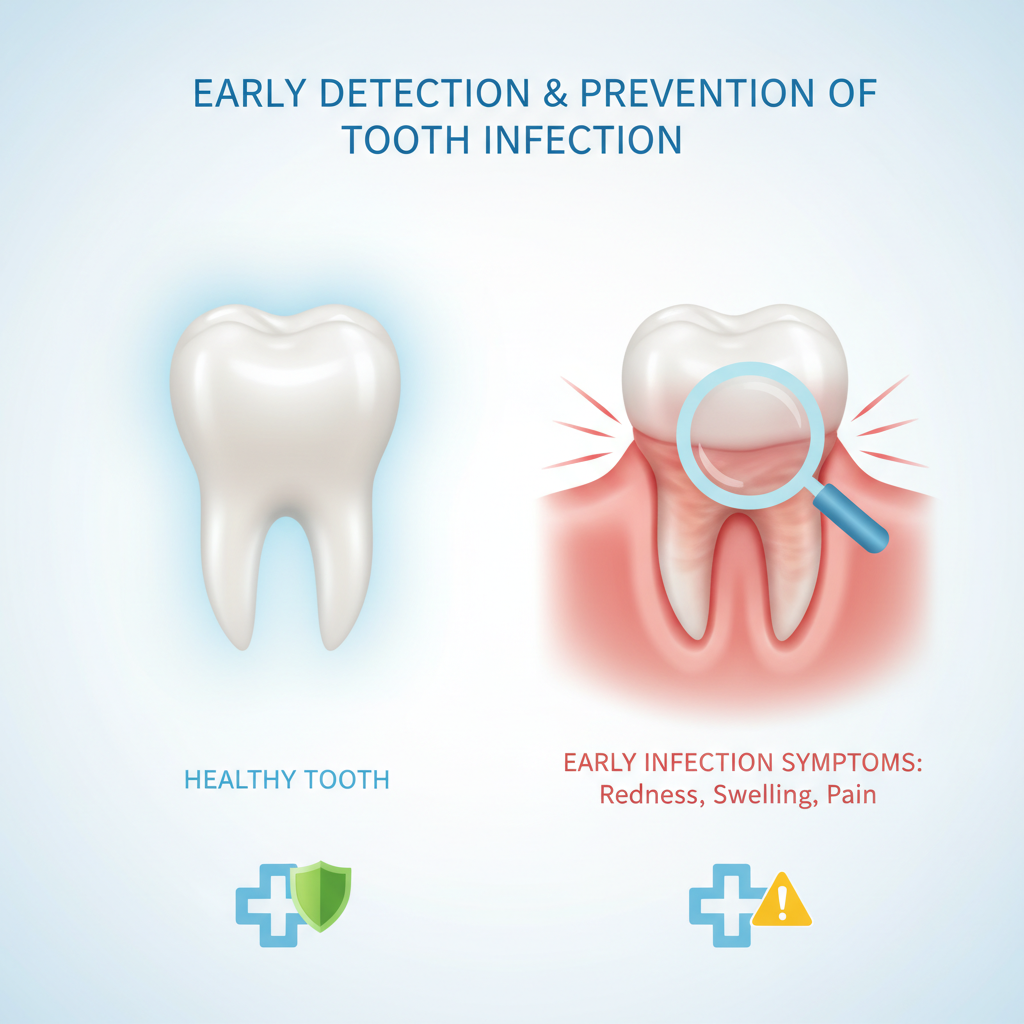
If you have nagging tooth pain or unexplained swelling, paying attention to the symptoms of tooth infection is critical. Tooth infections do not heal on their own and can spread from the affected tooth to your jaw, sinuses, or even your bloodstream if you wait too long to seek care [1]. Recognizing early warning signs helps you get treatment before the infection becomes an emergency.
You might already be familiar with common dental issues like cavities, gum disease, enamel erosion, and sensitivity. A tooth infection, or tooth abscess, often starts as one of these conditions and then progresses. Understanding how symptoms evolve, what is urgent, and how to protect your oral health gives you the confidence to act quickly when something is not right.
A tooth infection usually does not appear out of nowhere. It tends to follow a predictable path, starting with minor damage and moving inward over time.
Tooth infections commonly begin with tooth decay. Plaque bacteria on your teeth produce acids that gradually destroy your enamel. This process leads to cavities and, if untreated, a painful toothache once decay reaches the sensitive inner chamber of the tooth, called the pulp [2].
Your enamel acts like armor for each tooth. When it is weakened or damaged, bacteria have an easier route inside. You can learn more about how enamel breaks down in our guide on what is enamel erosion teeth.
If bacteria invade the pulp, the tissue inside your tooth becomes inflamed and infected. This often leads to irreversible pulpitis, which means the pulp cannot heal on its own. As the pulp tissue dies, a pocket of pus can form at the tip of the root, called a periapical abscess [3].
According to Penn Dental Medicine, this painful pocket of pus can spread infection into the gums, sinuses, jawbone, or even the brain if it is not treated promptly [2]. That is why early recognition and dental treatment are so important.
A tooth infection does not always start with a typical cavity. Bacteria can also reach the pulp through:
Cracks or chips in tooth enamel increase your vulnerability to tooth infection because they create direct pathways for bacteria. Since enamel protects your teeth like armor, any break in that shield can quickly lead to infection and pain [2].
Early symptoms of tooth infection can be subtle at first. You might think they are minor irritations that will go away on their own. In reality, they are warning signs that bacteria have moved deeper into the tooth.
Tooth pain is usually the first symptom you notice. According to Penn Dental Medicine, early symptoms include tooth pain or sensitivity that starts small and gradually gets worse over time [2]. Strong Roots Dental notes that this pain might feel like:
If you frequently ask yourself why do my teeth hurt randomly, it is important to consider that a developing infection could be the cause, especially if the discomfort keeps returning in the same area.
Temperature sensitivity is another common early symptom. When hot drinks, cold foods, or even a gust of cold air trigger sharp, shooting pain, it may indicate that the dentin or pulp is exposed or inflamed.
Strong Roots Dental points out that temperature sensitivity causing shooting pain from hot or cold exposure is a key early sign of a tooth infection [4]. It can sometimes be hard to tell if sensitivity is related to enamel erosion, gum recession, or infection, so reviewing common tooth sensitivity causes and treatment can help you understand what you are experiencing.
As your immune system responds to bacteria, you may notice:
Swelling or puffiness in your gums or face around one tooth often signals that infection is building and your body is trying to contain it [4].
Bacterial buildup and pus formation can create a persistent bad taste or odor. You might notice:
Strong Roots Dental notes that bad breath or a foul taste due to bacterial buildup is another early sign that a tooth infection may be developing [4].
Discoloration of a single tooth can also signal pulp damage. A tooth that is becoming infected may look:
Strong Roots Dental explains that tooth discoloration can indicate pulp damage and may be an early sign of infection in that tooth [4]. If you notice a color change in just one tooth, have it evaluated promptly.
As a tooth infection progresses, the symptoms become more obvious and more uncomfortable. At this stage, you likely have a tooth abscess that needs urgent treatment.
Pain from a tooth abscess is often:
VF Dental notes that a tooth infection occurs when bacteria invade the pulp, leading to inflammation, pressure, and often significant pain [1]. If you rely on over the counter pain relievers around the clock and the tooth still hurts, it is time to call your dentist.
Swelling is a key sign that the infection is spreading beyond the tooth itself. You may see:
Mayo Clinic explains that a tooth abscess is a pocket of pus caused by bacterial infection around the tooth, often at the tip of the root, and that symptoms include pain, swelling, and signs of infection near the affected tooth [3].
Sometimes an abscess drains on its own, either through the gum or into your mouth. If this happens, you might experience:
According to Mayo Clinic, if an abscess ruptures, your tooth pain may significantly improve temporarily. However, dental treatment is still necessary because the infection can continue to spread if not properly treated [3].
You may find it hard or impossible to chew with the affected tooth because of:
If you avoid chewing on one side for more than a day or two, it is important to find out why. Many early warning signs dental problems begin with subtle changes in how you chew or bite.
A localized tooth infection is serious. Once it starts spreading beyond the tooth and nearby tissues, it becomes a true medical emergency. Some of these symptoms are dangerous and require immediate attention.
As bacteria spread and your body fights back, you may develop:
myDental explains that symptoms such as fever, chills, swelling of the face or neck, fatigue, confusion, red streaks on the skin, and a rapid heartbeat can indicate that a tooth infection is entering the bloodstream and require emergency medical care [5].
Strong Roots Dental lists specific red flag symptoms that mean you need emergency care right away. These include:
Mayo Clinic also advises that emergency medical attention is needed if a person with a tooth abscess develops fever, facial swelling, or has difficulty breathing or swallowing, since these symptoms can indicate spread to the jaw, throat, neck, or other areas of the body [3].
When left untreated, a tooth infection can lead to dangerous conditions, including:
Strong Roots Dental notes that tooth infections can extend beyond the tooth to cause life threatening complications like sepsis, brain abscesses, jaw bone infections, and cardiovascular infections. This is why seeking treatment early is so important [4].
Mayo Clinic also warns that untreated tooth abscesses can spread to the sinus cavities, jaw, head, neck, or even result in life threatening sepsis, especially in people with weakened immune systems [3].
If you have any of these severe symptoms, you should go to an emergency room immediately, then follow up with your dentist or an endodontist once the infection is under control.
Not every toothache or gum issue means you have an abscess. Many common dental conditions share similar symptoms, but the underlying causes and urgency can be different.
In the earliest stages, a cavity may cause little or no pain. As it grows, you might notice sensitivity to sweets or temperature changes, or discomfort when biting. Our guide to signs of cavities early stage walks you through those subtle clues.
A tooth infection usually involves more intense, persistent, and throbbing pain that does not fully go away with medication. You might also see swelling or experience a foul taste in your mouth, which are not typical of a simple cavity.
Gum disease can cause:
You can learn more about these symptoms in our resources on how to know if you have gum disease and bleeding gums when brushing causes. While gum abscesses can occur, a tooth abscess usually centers around a specific tooth and often involves deep decay or trauma.
Enamel erosion and receding gums can produce significant sensitivity, especially to hot, cold, or sweet foods. However, this sensitivity is often brief and sharp, rather than deep and throbbing.
If you suspect your enamel is wearing down, review what is enamel erosion teeth. To understand more about gum recession and its symptoms, see what causes receding gums. These conditions are important to treat, but they are usually not emergencies in the way a spreading tooth infection can be.
Knowing when to schedule a dental visit and when to seek immediate emergency care helps you protect your health and avoid complications.
You should contact your dentist as soon as possible if you notice:
VF Dental emphasizes that tooth infections do not heal on their own. They require immediate professional dental or endodontic treatment to prevent spread, relieve pain, and save the natural tooth from extraction [1].
Some symptoms are not safe to wait on. You should go to the emergency room immediately if you experience:
myDental explains that these symptoms, including fever, chills, face or neck swelling, breathing or swallowing difficulty, fatigue, confusion, red streaks, and rapid heartbeat, may signal that the infection is entering your bloodstream and require emergency medical care [5].
Strong Roots Dental also advises that severe tooth infection symptoms such as difficulty breathing, swallowing, opening the mouth, rapid facial swelling, or spread beyond the tooth require ER visits for antibiotics and pain management before definitive dental treatment [4].
Once a tooth infection has been diagnosed, your dental team will focus on eliminating bacteria, relieving pain, and preventing further spread. Treatment depends on the severity and location of the infection.
To clear the infection, your dentist or endodontist may recommend:
Root canal therapy
This procedure removes infected pulp from inside your tooth, cleans and disinfects the canals, and seals them to prevent reinfection. Root canals can often save a tooth that would otherwise need extraction.
Incision and drainage
If you have a significant abscess, your dentist may make a small incision to drain pus and reduce pressure. This is often combined with root canal treatment or extraction.
Tooth extraction
If the tooth is too damaged to restore, removal may be the best option. The area is then cleaned to help clear the infection, and you can discuss replacement options later.
myDental notes that treatment for a severe tooth infection often involves both dental procedures, such as extraction or root canal, and antibiotic therapy, especially if the infection has spread beyond the tooth. Delaying treatment can lead to hospitalization and intravenous antibiotics [5].
Antibiotics help control bacterial spread, especially if the infection has moved beyond the immediate area of the tooth. However, they are not a substitute for dental procedures that remove the source of infection.
While you wait for definitive treatment, VF Dental notes that you may use over the counter pain relievers and cold compresses for temporary symptom relief, but professional care remains essential [1].
Important: Even if your pain improves after antibiotics or if the abscess drains on its own, you still need dental treatment to fully resolve the infection and prevent recurrence.
The best way to deal with tooth infection is to prevent it from developing in the first place. Fortunately, many of the same habits that protect you from cavities and gum disease also lower your infection risk.
Penn Dental Medicine emphasizes that proper oral hygiene is essential for preventing tooth infections. You can lower your risk by:
These habits remove plaque, which contains the bacteria that produce acids leading to tooth decay and eventual infection.
Routine dental visits allow your dentist to:
Scheduling regular cleanings and exams also gives you time to discuss concerns about sensitivity, pain, or changes in your bite, so problems are caught when they are easier to treat.
Because tooth infections often begin as cavities, reducing decay is one of your most powerful prevention tools. You can:
For more detailed strategies, review our guide on how to prevent tooth decay naturally. When you protect your enamel and catch cavities early, you drastically reduce the chance that bacteria will reach the pulp and cause an abscess.
Understanding the symptoms of tooth infection helps you respond quickly and appropriately when something feels wrong. Early signs such as mild tooth pain, sensitivity, swelling, bad breath, or tooth discoloration are your body’s way of telling you that bacteria may be moving deeper into the tooth.
To protect your oral and overall health, you should:
By staying alert to these warning signs and acting quickly, you give yourself the best chance of preserving your natural teeth, avoiding complications, and maintaining a healthy, comfortable smile.