
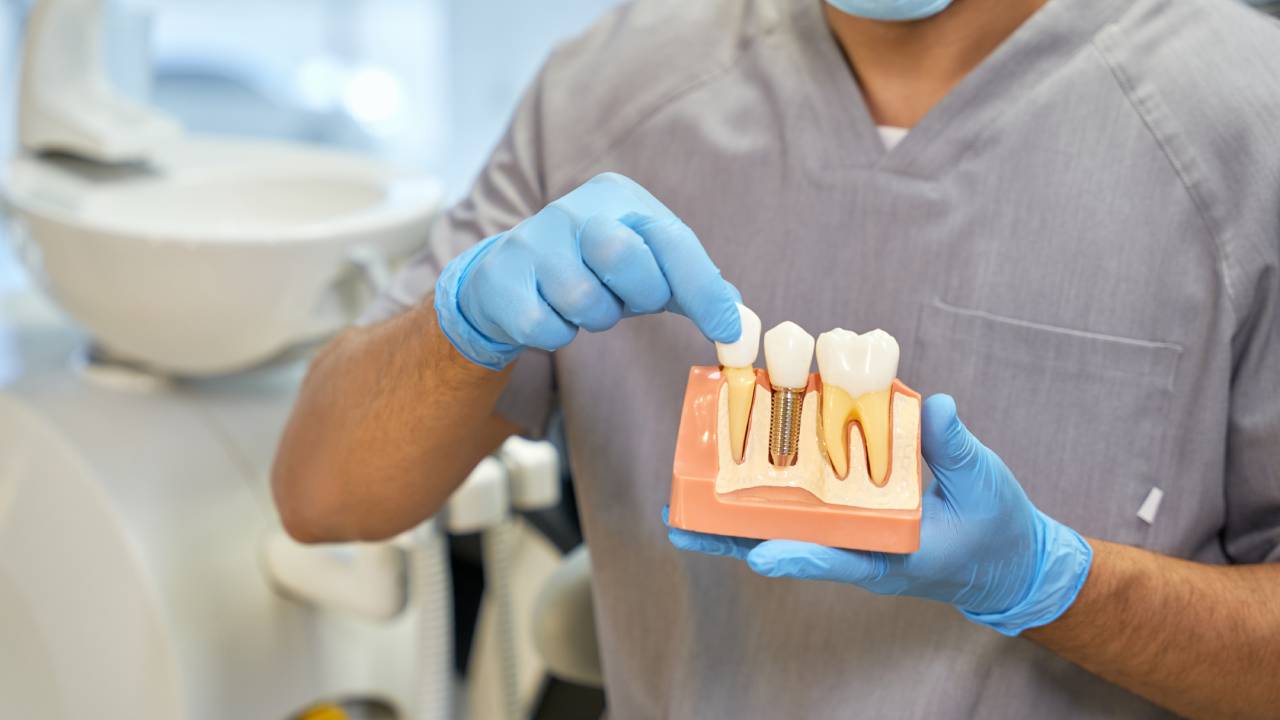
Most patients assume finding a dentist who handles both implants and crowns means juggling two offices, two schedules, and two sets of paperwork. That assumption costs time, money, and in some cases, treatment outcomes. Whether a dentist can do implants and crowns in the same office is a question worth asking before you book anything.
According to the American Dental Association's 2022 Survey of Dental Practice, approximately 43% of general dentists now offer implant services in-office, a sharp increase from a decade prior. That number reflects a broader shift in how dental practices are structured: more providers are investing in the training and technology to handle complex restorative work without routing patients to outside specialists.
Full-service dentistry, in practical terms, means one provider handles diagnosis, implant placement, and crown fabrication without a referral leaving the building. No outside oral surgeon. No separate prosthodontist lab across town. The dentist who examines your mouth is the same one designing your crown and placing the implant. That distinction matters because fragmented care introduces handoff errors, delays, and gaps in the treatment record that no single provider fully owns.
The label "general dentist" versus "oral surgeon" or "prosthodontist" tells you less than most patients think. What actually matters is documented implant training and volume. The American Academy of Implant Dentistry (AAID) offers a tiered credentialing pathway, and their data shows that thousands of general dentists have completed post-doctoral implant training equivalent in scope to what a specialist performs day-to-day.
When you're evaluating a practice, look past the degree and check for named credentials: AAID fellowship, Misch Implant Institute certification, or documented continuing education in implantology. The practical step is simple. Before booking a consultation, visit the practice's website and look for any mention of implant credentials or training. If nothing is listed, call and ask directly how many implant cases the dentist has placed.
A 2019 study published in the Journal of Dental Research, analyzing treatment records for 1,800 implant patients across multi-provider networks, found that cases involving two or more separate providers had a 34% higher rate of abutment fit errors and a measurably longer time-to-final-restoration compared to cases managed by a single provider. The mechanism is straightforward: when the dentist placing the implant also designs the crown, the measurements, abutment height, and bite alignment are treated as a single unified plan. When two providers are involved, each works from incomplete information about what the other did.
Understanding how modern dentistry has changed helps explain why this coordination is now achievable in a general practice setting. Technology has closed the gap between what specialists and well-equipped general dentists can offer. Before your first consultation anywhere, ask one direct question: does the same dentist place the implant and deliver the final crown, and does that happen at this location?
The standard implant-to-crown timeline runs through four stages: implant placement into the jawbone, an osseointegration period (typically three to six months as bone fuses with the titanium post), abutment fitting, and final crown placement. A single-provider office tracks each of these stages with the same digital records, the same imaging baseline, and direct knowledge of how the site has healed.
A 2021 study in the Journal of Oral Implantology followed 620 patients across single-provider versus multi-provider implant pathways. Patients in single-provider care reported significantly higher satisfaction scores at the crown delivery stage, specifically citing consistency of communication and fewer unexpected changes to the treatment plan. Knowing this sequence also helps you spot corners being cut. If a practice places implants but sends the crown work to an off-site lab without disclosing it, you're in a partial referral arrangement even if no one called it that.
ADA Health Policy Institute data from 2023 shows that the Charlotte-Concord-Gastonia metro area has one of the faster-growing dentist-to-population ratios in the Southeast, which means more options but also more variation in what practices actually offer in-house. Not every office advertising implants has the full capability to carry treatment through to crown delivery.
Four things are worth verifying directly. First, ask about implant training and annual case volume. Second, confirm whether the office has in-house crown milling technology, the kind that produces a permanent ceramic crown in a single visit rather than sending impressions to a lab. Third, ask about insurance pre-authorization: does the practice handle it for both the implant and crown as a combined treatment plan, or do you manage two separate claims? Fourth, ask to see before-and-after case photos for implant and crown work specifically. Moores Chapel Dentistry in Charlotte handles all four of these in-house, which is genuinely uncommon in a general dentistry setting.
A 2017 study in the Journal of Dentistry compared 208 CEREC same-day crowns against traditional lab-fabricated crowns over a five-year follow-up period. Marginal fit accuracy was statistically equivalent between the two groups, with same-day crowns showing no clinically significant difference in longevity or patient-reported comfort. The practical difference is time. A permanent crown delivered in one appointment eliminates the temporary crown stage, the second appointment, and the two-week wait for lab work.
Lab-fabricated crowns still have a role in complex cosmetic cases where shade matching requires a ceramist's eye and multiple layering passes. But for implant crowns and most restorative work, in-office milling is the faster, clinically sound option. Ask any practice you're evaluating: do you have in-house milling, and in which cases do you still send to a lab?
The 2023 NADP (National Association of Dental Plans) consumer data puts the average out-of-pocket cost for a single implant with crown between $3,000 and $4,800 depending on region and insurance coverage. In-network single-provider offices reduce that number in two ways: negotiated rates apply to the full treatment episode, and there's one administrative point of contact handling pre-authorization for both the implant and the crown together.
When implant placement and crown fabrication happen at separate offices, patients frequently encounter claim denials because each provider submits independently, without a unified treatment narrative the insurer can follow. When you call a Charlotte practice, ask specifically whether they handle insurance pre-authorization for the implant and crown as a single combined plan. The answer tells you a lot about how organized the billing process actually is.
A 2022 Healthgrades patient experience report analyzing 14,000 implant reviews found that the top three drivers of negative outcomes were fragmented care across multiple providers, undisclosed referrals for crown work, and selecting a provider based on price without verifying credentials or in-house capability. Each of those mistakes is correctable before you book anything.
Assuming any dentist can handle both implants and crowns without checking credentials is the most common error. Credentials are not standard; they require specific post-doctoral training and documented case volume. The second mistake is not asking whether crown fabrication happens in the same building, since understanding how long crown production actually takes makes clear why same-day in-house milling is a meaningful advantage. The third mistake is skipping the consultation in favor of price shopping. Price varies by case complexity, bone density, and crown type. The consultation is where you learn whether the quoted price includes everything or depends on referrals you haven't been told about yet.
Call one full-service dental office in Charlotte this week and ask two questions: does the same dentist place the implant and deliver the final crown, and is crown fabrication done in-house? Those two answers will filter your options faster than any review site. The practices that can say yes to both are the ones worth booking a consultation with.