
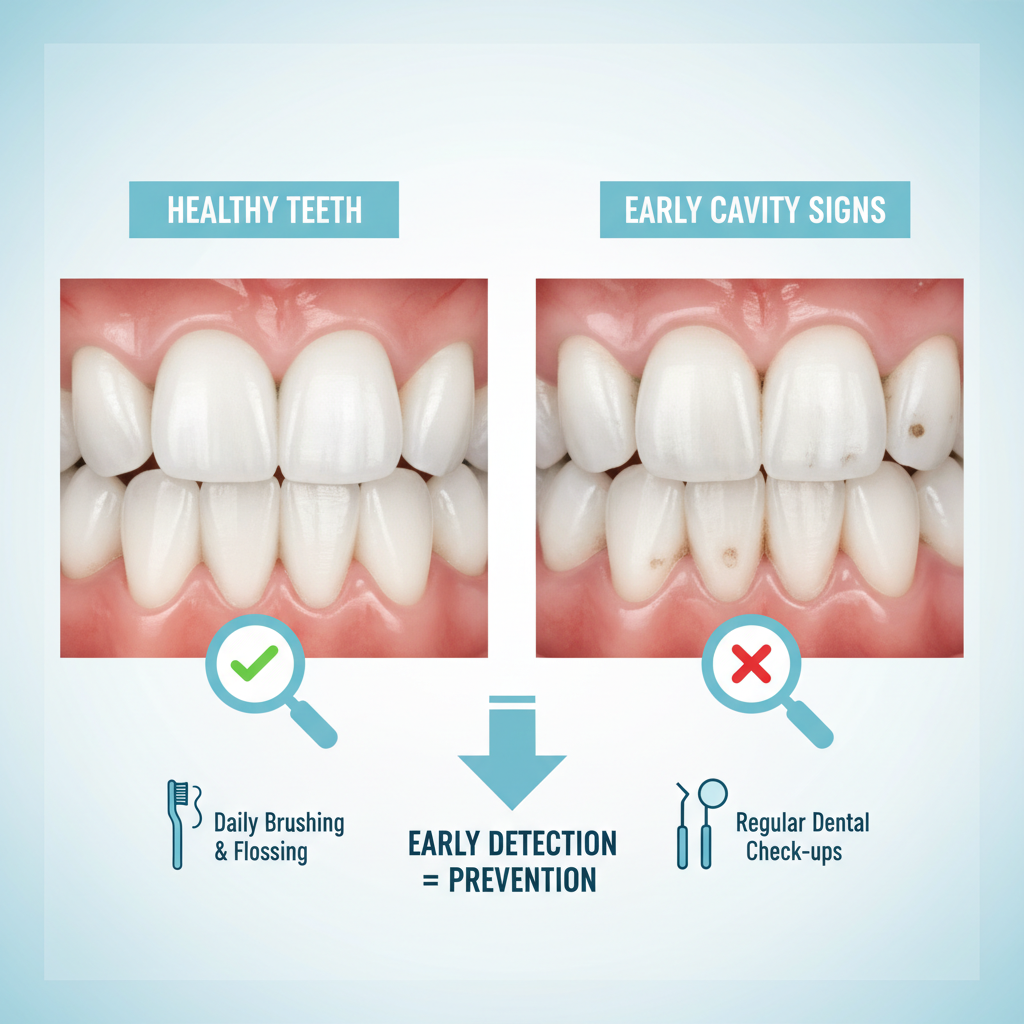
Why early signs of cavities matter
When it comes to tooth decay, the earliest signs of cavities in the early stage are usually silent. At this point, you may not feel pain or see a visible hole, but harmful changes are already happening inside your tooth enamel. If you know what to look for and act quickly, you can often stop or even reverse early tooth decay before it turns into a full cavity that needs a filling.
Cavities start small and grow with time. In the beginning, decay is limited to the outer enamel layer, where it may be reversible with fluoride and improved home care [1]. Once it progresses into the softer dentin underneath, you can no longer heal it on your own and dental treatment becomes necessary.
Understanding the signs of cavities in early stage can help you protect your teeth, save money on more complex procedures, and avoid painful emergencies in the future.
How cavities form in the first place
To recognize early cavity signs, it helps to understand what is actually happening to your teeth.
The role of bacteria, food, and time
Your mouth naturally contains bacteria. When you eat or drink, especially sugary or starchy foods, these bacteria feed on leftover particles and produce acids. Over time, these acids start to pull minerals out of your enamel, a process called demineralization [2].
If this acid attack happens repeatedly without enough time or support for your teeth to repair themselves, the demineralized area gradually becomes weaker. This is how an early cavity begins. In the very first stage, the damage can still be repaired with fluoride and good hygiene habits. If decay continues unchecked, it eventually creates a permanent hole in the tooth surface.
Why risk increases for some people
You are more likely to see early signs of cavities if you:
- Snack frequently during the day
- Sip sugary drinks or juices over long periods
- Have dry mouth or reduced saliva
- Do not brush and floss regularly or effectively
- Already have enamel wear or enamel erosion
Children and teens are at particular risk because their enamel is thinner and their brushing habits may be less consistent. However, adults often experience decay around old fillings, between teeth, and near the gumline.
What a cavity looks like in the earliest stage
The earliest signs of cavities in early stage are often visual and textural changes in the enamel, not yet a visible “hole.”
Chalky white spots on enamel
One of the very first warning signs is a small, chalky, white spot on the tooth surface, also called a white spot lesion or incipient lesion. This area looks whiter or duller than the surrounding enamel and may be hard to see unless you look closely in good light. These spots indicate mineral loss in the enamel before a hole has formed [3].
At this point, decay is often reversible. With professional fluoride treatments, fluoride toothpaste, and improved oral hygiene, the enamel can sometimes remineralize and harden again [1].
Color changes as decay progresses
If the early white spot is not addressed, the area can gradually darken. You might notice:
- White patches that turn yellow or light brown
- Spots that progress to darker brown or black
- Stains that do not brush away with regular cleaning
These color changes suggest that the decay is moving deeper into the enamel and possibly into the dentin layer underneath [4].
Subtle roughness, edges, and pits
Beyond color changes, you may feel small textural differences with your tongue:
- Rough patches on the tooth surface
- Sharp or snagging edges
- Tiny pits or craters that were not there before
These changes occur as the once smooth enamel becomes demineralized, softer, and slightly broken down. They are common on chewing surfaces of molars and near the gumline [5].
Early symptoms you might feel
Many early cavities have no noticeable symptoms at all, which is why they are so easy to miss. Both the Mayo Clinic and Colgate note that you often do not feel pain until decay has advanced beyond the enamel [6]. However, some people do experience mild changes.
Sensitivity to hot, cold, or sweet
Tooth sensitivity is one of the most common early complaints. You may feel a brief twinge or zinging sensation when you:
- Drink cold water or iced beverages
- Sip hot coffee or tea
- Eat sweet foods or drinks
This sensitivity can occur when the enamel thins or when decay approaches the dentin layer underneath, which contains tiny nerve endings. Listerine and Colgate both list temperature or sweet sensitivity as common early signs of a cavity [7].
It is important to remember that sensitivity does not always mean a cavity. It can also be related to worn enamel, gum recession, or grinding. If you want to explore these possibilities further, you can read more about tooth sensitivity causes and treatment. Persistent or worsening sensitivity should always be checked by your dentist.
Mild discomfort when chewing
In early stages, you might notice:
- A slight ache when chewing in a specific area
- A feeling that one tooth is more “tender” when you bite down
- Occasional sharp pain with pressure on a particular spot
This usually means that decay is starting to affect deeper layers or that the tooth structure is weakened. Listerine notes that sharp pain when biting down can be a sign of a cavity or another dental issue that needs attention [8].
If you catch yourself wondering, “why do my teeth hurt randomly,” it is a clear sign that you should not ignore the symptom. You can learn more about possible causes at why do my teeth hurt randomly.
Sticky feeling or food getting trapped
Another early sign is a sticky or “catching” feeling when you bite, especially on the chewing surfaces of molars. You might notice food repeatedly getting stuck in the same place, or floss shredding when you use it in a particular gap.
Colgate describes this kind of sticky sensation or feeling of roughness as a possible sign that a cavity is forming [9].
Why early cavities are hard to see yourself
Even if you pay close attention to your teeth, early cavities are easy to miss at home. There are several reasons for this.
Hidden locations where cavities start
Cavities tend to develop in places that are harder to see or clean, including:
- Deep grooves and pits on the chewing surfaces of back teeth
- Tight spaces between teeth
- Around the edges of old fillings or crowns
- Near the gumline, especially if your gums are receding
These locations make it difficult to spot early color changes or tiny pits on your own, especially without good lighting or magnification [5].
If you are also experiencing bleeding or tenderness around your gums, that can point to gum disease instead of or in addition to cavities. You can learn more at bleeding gums when brushing causes or how to know if you have gum disease.
Why you often feel no pain at first
The outer enamel of your teeth has no nerves. That means decay limited to that layer is usually painless. Pain and more obvious symptoms typically appear only when decay reaches the dentin or the inner pulp, which contain nerve tissue [10].
Multiple sources, including the Mayo Clinic and Kaimuki Center for Dentistry, emphasize that early cavities often cause no pain or symptoms at all. By the time you feel a toothache, the cavity is usually well developed [11].
How dentists detect early-stage cavities
Because signs of cavities in early stage are so subtle, professional exams are essential if you want to catch problems as soon as possible.
Visual exams and probing
During a routine checkup, your dentist carefully inspects your teeth under bright light and often with magnification. They may:
- Look for white, brown, or black spots
- Examine the edges of fillings and crowns
- Use a small dental probe to gently test for soft or sticky areas
Softness in the enamel can reveal developing decay long before a visible hole appears. Regular checkups, usually every six months, are important for this early detection [12].
Dental x-rays
X-rays are a key tool for finding cavities that are not visible to the eye. They help your dentist see:
- Dark spots or shadows between teeth
- Decay under existing fillings or crowns
- Changes in the density of enamel and dentin
Tulsa Dental Center explains that on x-rays, early-stage cavities show up as dark areas that indicate mineral loss. This makes x-rays especially important for identifying hidden decay early [5].
Traditional x-rays do have limits. Very tiny lesions may not show up until they have progressed to a certain size. That is why some practices also use advanced diagnostic tools.
Laser-based early detection technology
Some dental offices now use low-powered laser devices to detect early cavity activity. Centers like Kaimuki Center for Dentistry and Team Dental describe how these tools shine a focused light on the tooth and measure changes in fluorescence. Damaged enamel glows differently than healthy enamel, so the technology can pick up decay that is not yet visible on x-rays or by visual exam [13].
These laser screenings are:
- Painless and non invasive
- Quick to perform during a regular appointment
- Helpful for finding decay in deep grooves and small crevices
Early detection through these methods allows for smaller, less invasive, and less costly treatments that preserve more of your natural tooth structure [14].
Catching decay at the earliest stage gives you the best chance to avoid bigger fillings, root canals, and tooth loss later on.
Can early-stage cavities be reversed?
One of the most important reasons to watch for early signs of cavities is that in the very beginning, damage may still be reversible.
When remineralization is possible
If decay is limited to early enamel demineralization, with no true hole yet, you may be able to stop or reverse it with the right steps. Cleveland Clinic and All Smiles Dentistry both note that very early cavities can sometimes be healed with fluoride and good oral hygiene [15].
Your dentist may recommend:
- Prescription or in-office fluoride treatments
- Fluoride toothpaste and mouthwash
- Improved brushing and flossing technique
- Dietary changes to reduce sugar and acid exposure
If you are interested in daily habits that support this process, explore how to prevent tooth decay naturally.
When a filling becomes necessary
Once decay has broken through the surface and created a cavity in the enamel, natural healing is no longer possible. At this stage, bacteria and acids can easily enter and continue to erode the tooth. A professional restoration, such as a filling, inlay, or crown, is required to remove decay and seal the area.
Delaying treatment allows the cavity to grow. Colgate and the Mayo Clinic both warn that untreated decay can lead to more invasive procedures, including crowns, root canals, or extractions if the damage reaches the nerve or causes infection [16].
When early cavities turn into bigger problems
If early signs of cavities are ignored, several serious complications can develop over time.
Deep decay and tooth pain
As decay advances from enamel into dentin and then toward the pulp, you may experience:
- Persistent, throbbing toothache
- Pain that wakes you at night
- Pain that lingers after hot or cold contact
- Sensitivity when chewing on that side
By this point, the cavity is no longer in an early stage. The nerve inside the tooth may be inflamed or infected. Left untreated, this can lead to an abscess and eventually tooth loss. For more detail on red flag symptoms, you can review symptoms of tooth infection.
Rapid progression in certain cases
According to All Smiles Dentistry, tooth decay can sometimes progress from minor demineralization to more severe cavities in as little as three to six months, depending on your diet, hygiene, and other risk factors [17]. Children, people with dry mouth, and those with a lot of previous dental work are especially vulnerable.
Even something as simple as a loose filling can create a small gap that traps bacteria and food, leading to rapid decay around and under the existing restoration. This can quickly escalate into a situation that requires a root canal or crown if not addressed [17].
How to reduce your risk of early cavities
You cannot always see early decay yourself, but you can lower your risk and support your enamel every day.
Strengthen daily home care
Good brushing and flossing habits remain the foundation of cavity prevention at any stage. The Mayo Clinic emphasizes that consistent hygiene is one of the most effective ways to prevent tooth decay before visible signs or pain appear [2].
Focus on:
- Brushing at least twice a day with fluoride toothpaste
- Flossing daily to clean between teeth and under the gumline
- Cleaning thoroughly around dental work such as fillings and crowns
- Rinsing after snacks or sugary drinks when you cannot brush
If you also struggle with bleeding or swollen gums, improving your gum health is just as important. Our guide on early warning signs dental problems can help you connect different symptoms you might be noticing.
Adjust your diet and habits
Every time you eat or drink something sugary or acidic, your enamel goes through an acid attack that lasts for about 20 to 30 minutes. Frequent snacking, sipping sweet drinks, or bedtime snacking gives your teeth little chance to recover.
Try to:
- Limit sugary snacks and beverages
- Drink water regularly throughout the day
- Avoid slowly sipping soda, juice, or sports drinks over many hours
- Chew sugar free gum to stimulate saliva after meals
Small changes in these habits can make a significant difference in how your teeth respond to everyday acid challenges.
Stay consistent with professional visits
Because early signs of cavities are often invisible and painless, regular exams and x-rays are essential. Colgate and the Mayo Clinic recommend routine dental visits, often every six months, for cleaning and early detection of decay before it becomes serious [16].
At these visits your dentist can:
- Identify white spot lesions and recommend fluoride
- Detect tiny cavities between teeth or under fillings
- Use laser diagnostics, if available, to find very early decay
- Create a personalized prevention plan based on your risk level
Regular preventive care is almost always less costly, less time consuming, and more comfortable than waiting until you have pain or visible damage.
When you should call your dentist
You should schedule an appointment if you notice any of the following possible signs of cavities in early stage:
- New white, brown, or black spots on your teeth that do not brush away
- Rough or sharp areas that your tongue catches on
- Sensitivity to hot, cold, or sweet that persists or worsens
- Mild but repeated discomfort when chewing on a specific tooth
- Food consistently trapping in the same place between teeth
You should seek prompt care if you experience:
- Persistent toothache or pain that keeps you awake
- Swelling in the gum or face near a tooth
- Pus, bad taste, or signs of infection
These are no longer early signs and could indicate deeper decay or infection that needs urgent attention.
Recognizing the earliest signs of cavities gives you the opportunity to act before small problems turn into major treatment. By combining steady home care, smart diet choices, and regular professional checkups, you can keep your teeth stronger for longer and avoid the stress and cost of advanced decay.
References
- (Cleveland Clinic)
- (Mayo Clinic)
- (Cleveland Clinic, Tulsa Dental Center)
- (Tulsa Dental Center, Listerine)
- (Tulsa Dental Center)
- (Mayo Clinic, Colgate)
- (Listerine, Colgate)
- (Listerine)
- (Colgate)
- (Cleveland Clinic, Mayo Clinic)
- (Mayo Clinic, Kaimuki Center for Dentistry)
- (Cleveland Clinic, Colgate)
- (Kaimuki Center for Dentistry, Team Dental)
- (Team Dental)
- (Cleveland Clinic, All Smiles Dentistry Allen)
- (Colgate, Mayo Clinic)
- (All Smiles Dentistry Allen)


