
Most Delta Dental plans help pay for dental surgery when it is medically necessary, such as teeth removal, impacted wisdom tooth extraction, biopsies, and treatment after facial trauma. What you pay depends on three things: which benefit level your plan assigns the procedure to, whether you have met your deductible and any waiting period, and whether the dentist is in network. In Charlotte, Moores Chapel Dentistry is in network with Delta Dental. That helps patients keep costs predictable when an urgent problem turns into a surgical one.
This guide covers how to read your benefits, which surgeries are usually covered, how to estimate your share before treatment, and how dental and medical insurance work together. Each section answers one question, so you can go straight to the part you need.
How does dental surgery covered by Delta Dental work?
Delta Dental does not offer one single plan. Employers, schools, and individuals buy different versions, and each version has its own written contract. For example, a university dental administrative services contract sets out covered services, limitations, and exclusions, and different plan tiers within it carry different benefits. This is why two people with “Delta Dental” can owe very different amounts for the same surgery.
Before you schedule any procedure, open your plan documents or log in to your online member account. Look for:
- Benefit levels and the coverage percentage for each
- Your annual maximum and any lifetime maximums
- Your deductible and coinsurance
- Waiting periods for basic and major services
- Exclusions or limitations that apply to surgical care
Many plans also publish a member packet that explains these terms in plain language. One such Delta Dental member packet walks members through how their dental insurance works, and reading yours gives you a clear picture before you sit down with your dentist.
What benefit level does oral surgery fall under?
Many Delta Dental plans sort services into three levels: preventive, basic, and major. The table below shows a common structure. Your own plan may use different percentages or place a procedure in a different level, so treat this as a guide to the pattern rather than a promise about your coverage.
| Benefit level | Examples | Typical coverage pattern |
|---|---|---|
| Preventive | Exams, cleanings, X-rays | Often the highest percentage, sometimes full coverage |
| Basic | Fillings, simple extractions | A moderate percentage after the deductible |
| Major | Crowns, bridges, many oral surgeries | A lower percentage after the deductible |
The key point is that simple teeth removal and surgical teeth removal are not always billed the same way. A simple extraction of a visible tooth is often a basic service. A surgical extraction, such as an impacted wisdom tooth that requires cutting into bone or gum tissue, is more often classified as major. Your plan contract decides the category, and the procedure code your dentist submits decides which line of that contract applies.
What is a deductible, and does it apply to surgery?
Your deductible is the amount you pay each benefit year before your plan starts paying for basic or major care. Preventive services often skip the deductible, but restorative care and surgery usually apply it.
That means the first surgery of the year can cost more out of pocket than a second procedure later in the same year. If you know you need treatment, ask your dentist’s office how much of your deductible you have already met. The office can often check this when verifying your benefits.
What happens when you reach your annual maximum?
Your annual maximum is the most Delta Dental will pay toward your care in one benefit year. Once you reach it, you pay the full cost of any additional treatment until the plan year resets. Some plans also set lifetime maximums for specific treatments, such as orthodontics.
Surgery can use up a large share of an annual maximum quickly, especially if it is followed by restorative work. When a treatment plan involves several steps, it can make sense to ask your dentist whether any non-urgent steps can be timed across two benefit years. This is a decision to make with your dentist, because delaying needed care to save money can create bigger health problems later.
How long are Delta Dental waiting periods for oral surgery?
Some Delta Dental plans, particularly individual plans, include waiting periods before basic or major services are covered. Many employer plans have no waiting periods at all. The only reliable answer is in your own plan documents.
If your plan does have waiting periods, they usually look something like this:
| Service type | How waiting periods often work |
|---|---|
| Basic services | A waiting period of several months may apply |
| Major services | A longer waiting period may apply |
If you recently switched from a comparable plan, ask whether your new plan waives waiting periods based on your prior coverage. Some plans grant this credit, but you may need to provide proof of the earlier policy.
Which oral surgeries does Delta Dental usually cover?
Delta Dental plans generally cover surgical procedures that are medically necessary. Common examples include:
- Removal of impacted wisdom teeth
- Surgical extraction of diseased or badly broken teeth
- Bone grafting before implant placement
- Biopsies of suspicious tissue
- Repair of injuries from facial trauma
Most plans pay for these at the major services level after the deductible. Some medically required procedures, such as removing a cyst or repairing a jaw fracture, may also be partly covered by medical insurance.
Wisdom teeth are one of the most common reasons people look up their surgical benefits. The ADA’s patient site, MouthHealthy, explains wisdom teeth and why some people need them removed. That background can help you understand why your dentist is recommending surgery and what questions to ask.
Does Delta Dental cover emergency dental surgery?
If you break a tooth, injure your jaw, or develop a serious infection, most Delta Dental plans help pay for the emergency exam and care needed to stabilize the problem. The emergency visit itself, including an exam and X-rays, is often billed separately from any surgery that follows.
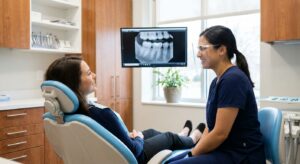
Moores Chapel Dentistry provides emergency dental care for patients in Charlotte, Arlington, Belmont, and Paw Creek. The office uses digital X-rays and an intraoral camera, which let the dentist see the problem clearly and show you what is happening. That documentation also supports the claim if surgery or restorative work is needed afterward.
Are bone grafts and implants covered as major services?
Bone grafts, implant placement, and jaw reconstruction usually fall under major services, if they are covered at all. Some plans exclude implants entirely or limit how often they will pay to replace a tooth. Because coverage varies so much for these procedures, confirm the percentage and any exclusions with your plan before you commit to treatment.
How can you estimate your cost before dental surgery?
Estimating your share ahead of time is the best way to avoid an unexpected bill. Two tools help most.
What is a pre-treatment estimate?
A pre-treatment estimate, sometimes called a predetermination, is a written breakdown from Delta Dental showing what your plan expects to pay and what you are likely to owe for a proposed procedure. Your dentist submits the treatment plan, and Delta Dental reviews it against your benefits. To get one:
- Ask your dentist to submit the treatment plan with procedure codes.
- Make sure your patient and plan details are complete and correct.
- Review the estimate when it arrives, before you schedule the procedure.
An estimate is not a guarantee of payment. Your eligibility, remaining maximum, and deductible on the date of service still apply. It is still the clearest preview you can get, and it is worth the short wait for non-emergency surgery.
Does Delta Dental have an online cost estimator?
Delta Dental offers an online cost estimator through its member website that gives approximate price ranges for common procedures. These ranges are general and do not reflect your specific plan or provider. Use the online tool for a rough idea of cost, and use the pre-treatment estimate for a number based on your actual coverage.
Will medical insurance pay for oral surgery?
Sometimes. Dental insurance is built for routine and restorative oral care. Medical insurance may cover oral procedures that are medically necessary, such as removing cysts or tumors or treating facial trauma from an accident.
When both plans apply, the medical carrier may pay first, with Delta Dental covering part of the remaining balance under your dental benefits. This process is called coordination of benefits.
How does coordination of benefits work?
To get the most from both plans:
- Ask whether your procedure qualifies under your medical benefits.
- Ask whether your dental office can file medical claims or only dental claims.
- Submit claims to both carriers according to each one’s process.
- Keep copies of each explanation of benefits.
If you are unsure, talk with your dental office and both insurance companies before treatment. A short call to each can prevent a denied claim.
Why does an in-network dentist matter for oral surgery?
Seeing an in-network dentist usually gives you the highest level of coverage and protects you from balance billing. Balance billing happens when a provider charges you the difference between its full fee and the rate your insurer allows.
In-network dentists have agreed to Delta Dental’s contracted fees, so they do not bill you for that difference. Out-of-network providers have made no such agreement, and you may owe any unpaid balance.
Moores Chapel Dentistry is in network with Delta Dental, Aetna, and Cigna. The practice also accepts many other plans, including Blue Cross Blue Shield, MetLife, Humana, UnitedHealthcare, and Medicaid. Accepting a plan is not the same as being in network with it, so if you have a plan other than those three, ask how your claim will be handled.
If your procedure requires a specialist, such as an oral surgeon, the Delta Dental online provider directory lets you search for in-network specialists near you.
How can you prepare for out-of-pocket costs?
Even with good coverage, you may owe coinsurance, your deductible, and any amount over your annual maximum. To prepare:
- Read your pre-treatment estimate line by line.
- Ask whether the office offers payment plans or financing.
- Ask what is urgent and what can safely wait, if cost is a concern.
Knowing the numbers before the procedure makes it easier to plan and lets you focus on healing afterward.
How should claims for dental surgery be filed?
Accurate claims are paid faster. Most in-network offices file claims for you, but it helps to know what a complete claim includes:
- Complete patient and plan information
- Itemized charges with procedure codes
- X-rays or clinical notes when the plan asks for them
- Medical documentation if you are coordinating benefits
Keep copies of everything. If you have not received an explanation of benefits within a reasonable time after your procedure, contact Delta Dental or ask your dental office to follow up.
When should you seek urgent dental care?
Some problems should not wait for an estimate. Contact a dentist promptly if you have:
- Severe tooth pain that lasts more than a day
- Swelling or bleeding you cannot control
- A knocked-out or broken tooth
- Signs of infection, such as fever or facial swelling
Oral infections can affect your overall health, not only your mouth. The National Institute of Dental and Craniofacial Research and the CDC both offer public information on oral health and its connection to general health. Spreading swelling, trouble swallowing, or trouble breathing calls for immediate emergency medical care.
Many dental offices keep time open for same-day or next-day emergencies. When you call, have your Delta Dental member ID ready and describe your symptoms clearly so the office can fit you in appropriately.
What should you ask your dentist before oral surgery?
No guide replaces a direct conversation with your dentist. Before any surgery, ask the office to:
- Confirm your coverage percentage, deductible, and remaining maximum
- Submit a pre-treatment estimate for non-emergency work
- Give you a written treatment plan with procedure codes
- Explain whether any part of the procedure might be billed to medical insurance
The American Dental Association also provides general information about dental treatment and how to talk with your dentist about care. Arriving with these questions written down helps you leave the appointment with clear answers.
How do you keep your Delta Dental plan current?
Your benefits can change when you switch jobs, add a dependent, or renew a policy. To avoid surprises:
- Read renewal notices for changes to maximums, percentages, or waiting periods.
- Review your options during open enrollment.
- Ask about waiting period credit if you change plans.
- Give your dental office your updated insurance card right away.
Keeping your information current helps your dentist verify benefits quickly when surgery comes up unexpectedly.
The bottom line on Delta Dental and oral surgery
Dental surgery covered by Delta Dental usually means partial coverage, not full coverage. Medically necessary procedures like surgical teeth removal and trauma repair are commonly paid at the basic or major level after your deductible, up to your annual maximum. Check your plan contract, request a pre-treatment estimate when time allows, see whether medical insurance applies, and choose an in-network dentist to keep your share as predictable as possible.
For families in Charlotte and nearby Arlington, Belmont, and Paw Creek, Moores Chapel Dentistry offers emergency, restorative, and gum disease care in one welcoming office. As an in-network Delta Dental provider, the practice can help you understand your benefits before treatment begins.